Nothing happens when you stop
The strange thing about practising alone is how little resistance there is to not doing it. Skip a day and nothing happens. Skip a fortnight and still nothing happens — the instrument sits where it always sits, the world carries on, and the only cost is a vague feeling you would rather not examine.
Almost nobody decides to quit an instrument. They simply run out of days on which anything reminded them, and at some point the gap gets long enough to feel like an answer. Compare that with the things you do keep doing reliably: the lesson you booked, the band rehearsal, the friend waiting at the pool at seven. What those share is not discipline. It is another person who would notice.
One person beats an audience
Announcing to everyone that you are learning the piano rarely helps for long. A general audience cannot tell whether you played this week, so their encouragement floats free of anything you actually do — and after a while it starts to feel less like support and more like a debt.
One person who knows what you are working on is worth more than all of it, because they can ask a specific question. How is the second page going? has a real answer, and you know in advance whether you will enjoy giving it. That small, entirely private stake is usually enough to get you to the instrument on a Tuesday evening.
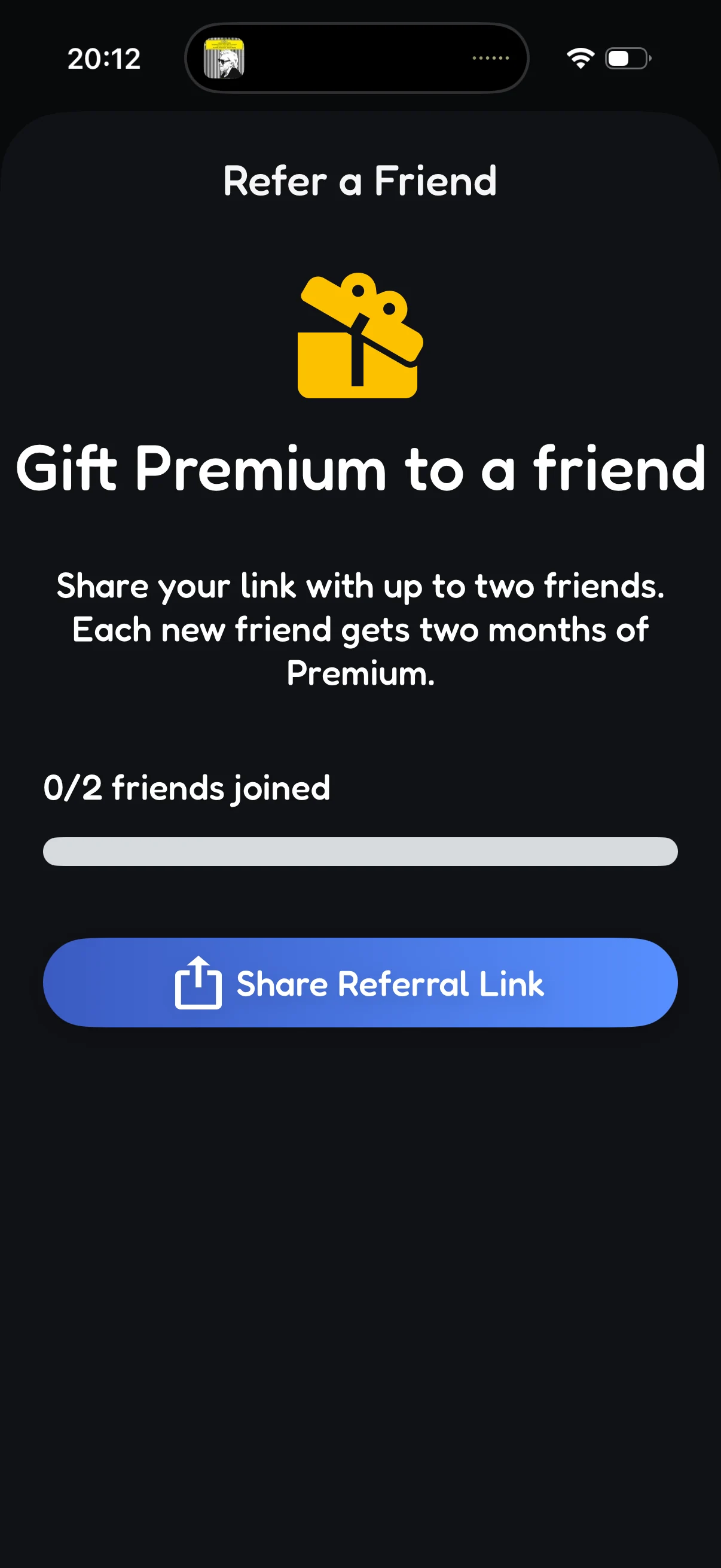
Invite someone you already know — their hours sit next to yours, and referrals unlock premium.
What a practice partner actually does
Not lessons, and not criticism. A practice partner mostly does three unglamorous things. They give the week a checkpoint, so your practice is measured by something other than how you feel about it. They make the dull stretches less lonely — scales, the same four bars, the fortnight where nothing audibly improves. And they put a little friendly heat under your numbers: when you can see that someone you know logged four hours and you logged one, the fourth session of the week gets easier to start.
In the app this stays deliberately low-key. You invite someone you already know, and from then on their hours and streak sit alongside yours. Nobody is marking anybody. You simply stop practising in a vacuum — and referrals happen to unlock premium features, which is a pleasant side effect rather than the reason to do it.
They do not need your instrument, or your level
The most useful partner is often not the person most like you. A singer and a bass player can hold each other to a weekly minute count perfectly well. A beginner paired with someone three years ahead usually works better than two people at exactly the same stage: one gets a realistic picture of what the coming year looks like, the other gets the clarity that only comes from explaining something out loud.
What matters is that they are genuinely practising something, and that you would not mind hearing from them on a Sunday.
Keep it light — guilt is the failure mode
The way this goes wrong is predictable. It becomes an obligation, then a source of guilt, then something you avoid, and then you have lost the habit and the person. Keep the bar low enough that a bad week survives it. Five minutes counts. A message saying rough week, twenty minutes total counts too, and is far more useful than silence.
Aim for a rhythm rather than a rule: a quick check on Sunday, a glance at each other's week, no explanations required. The point is not to perform consistency for somebody. It is to make sure the weeks you drift do not pass entirely unremarked.
Ask someone this week
Most people overthink this. You do not need a formal arrangement or a shared goal. You need one person, one message, and the mild social gravity that follows. Think of who already asks how the playing is going: the friend from choir, the colleague with the neglected guitar, the sibling who started lessons in January.
Send it today. The habit you are trying to build has survived far worse ideas than this one, and this one costs a text message.
Practice smarter, starting today
Metronome, practice timer, note reading, rhythm training and more — free to download.
Free to download · iPhone, iPad & Android